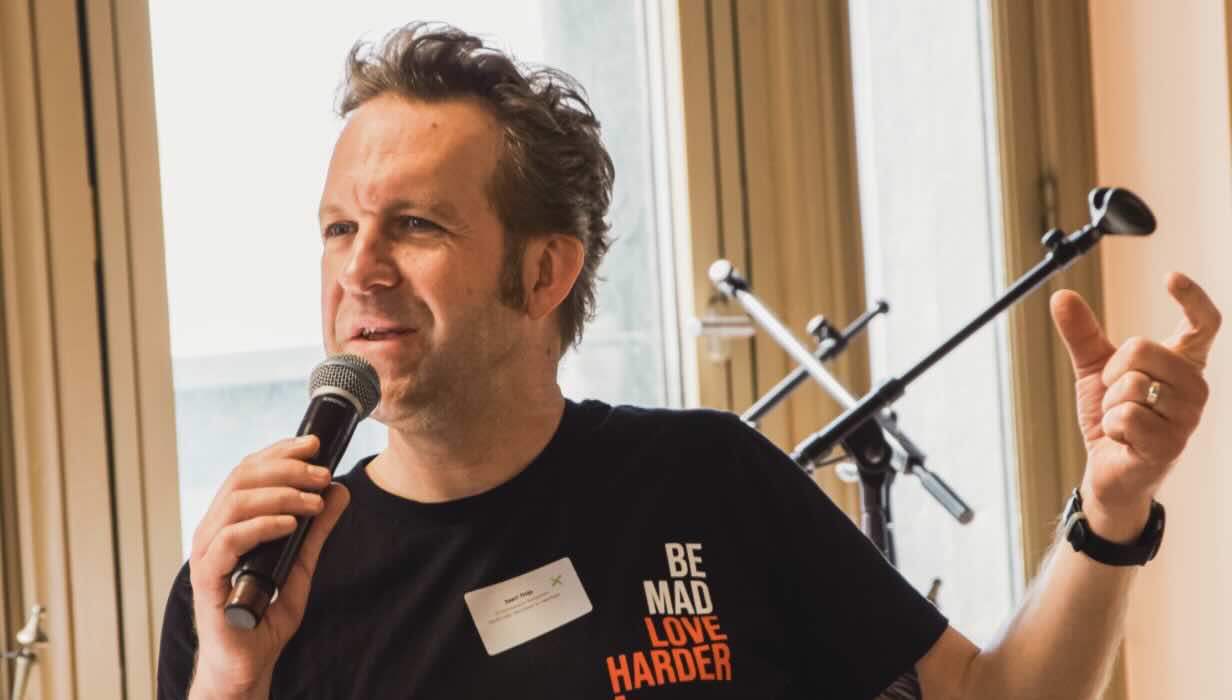
Joeri Thijs, Greenpeace
Our work and activism at Greenpeace often feel like a sprint. When you look at the climate and biodiversity crises - at the extreme weather, the wildfires, and the political inertia we’ve seen again this summer - the urge to move faster, push harder, and shout louder is overwhelming.
Greenpeace works to protect our planet, defend biodiversity and challenge the systems that are driving the climate and ecological crises. We’re very happy to have them supporting Slow Up for Humanity.
Because even for people who spend their days fighting for change, slowing down can feel almost impossible.
Joeri Thijs of Greenpeace puts it this way:
"Our work and activism at Greenpeace often feel like a sprint. When you look at the climate and biodiversity crises - at the extreme weather, the wildfires, and the political inertia we’ve seen again this summer - the urge to move faster, push harder, and shout louder is overwhelming. We live in a world that conditions us to believe that speed equals impact and that productivity is our highest virtue. But in our rush to save the world, we sometimes forget a fundamental truth: you cannot heal an exhausted planet with an exhausted movement.
Our fight has always been about protecting nature and standing up for humanity. But the root cause of the environmental crisis isn't just fossil fuels or bad policy - it’s an economic system obsessed with infinite growth on a finite planet. A system that treats both human beings and nature as resources to be extracted, consumed, and discarded. We are taught to outrun ourselves, pushing ecosystems as well as our own bodies past their natural boundaries.
That is why Slow Up for Humanity hits such a vital nerve.
Slowing down is not about stepping back or giving up; it is an act of defiance. Pausing to rest, to reflect, and to reconnect is how we actively reject the "more, faster, harder" logic of a destructive growth economy.
When we slow down, we give nature room to breathe, and we give ourselves the space to heal, think critically, and imagine the kind of world we actually want to build."
It’s a feeling many activists will recognise.
When the problems are urgent, slowing down can almost feel irresponsible. There is always another campaign, another protest, another report to read, another decision to challenge.
Slow Up is an invitation to pause that sprint for a moment. Not because the urgency has disappeared, but because we believe that rest, reflection and connection are part of how we sustain the people who are working for change.
We’re grateful to have Greenpeace alongside us for this 25-hour collective slowdown.
Lees andere verhalen


.avif)



.svg)